


SHARPAL
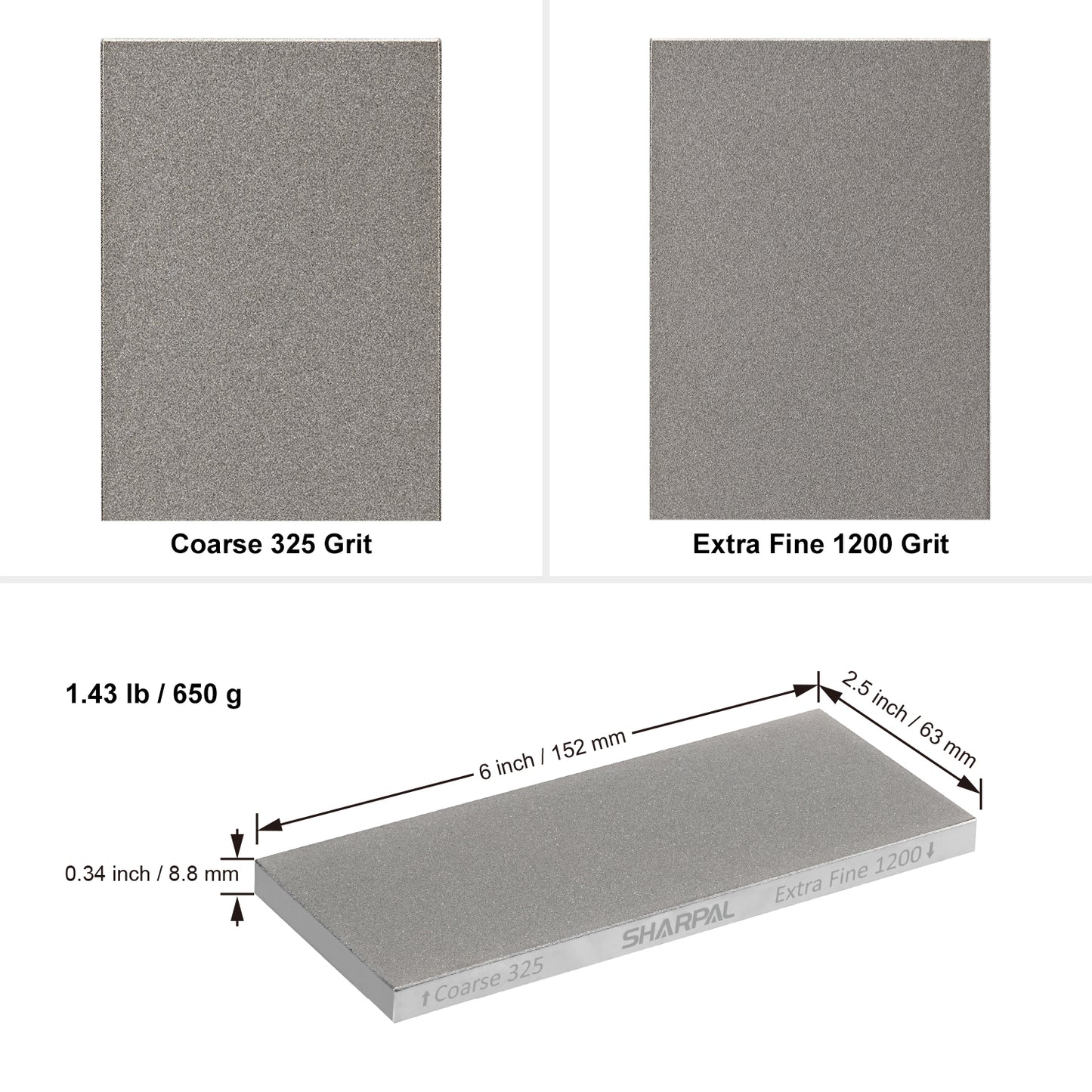
156N Dual-Grit Diamond Whetstone with Storage Base 6'' x 2.5'' / 152 x 63 mm Coarse / Extra Fine
156N Dual-Grit Diamond Whetstone with Storage Base 6'' x 2.5'' / 152 x 63 mm Coarse / Extra Fine
Key Features
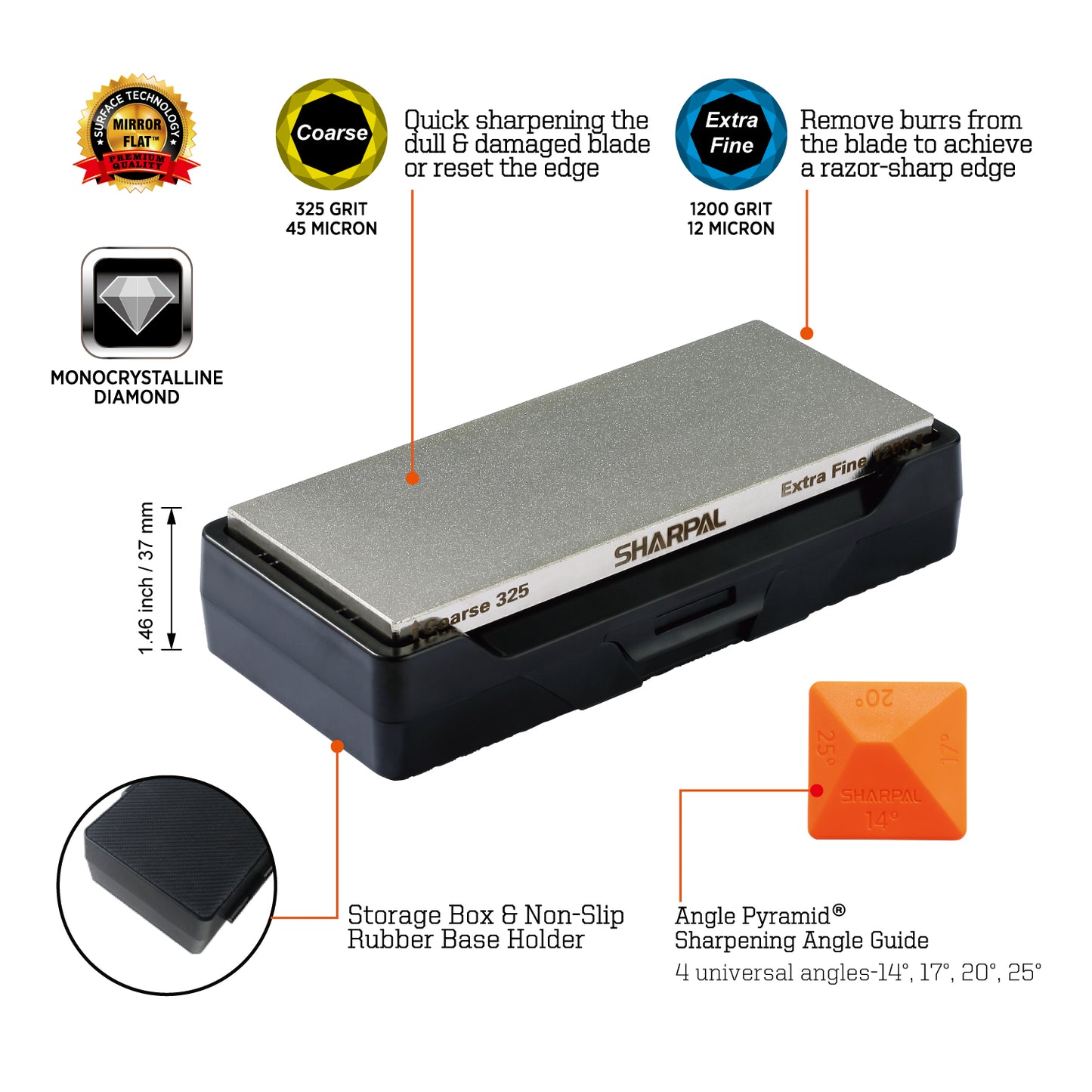
- Coarse 325 grit (45 micron) for quick edge setting
- Extra fine 1200 grit (12 micron) for honing
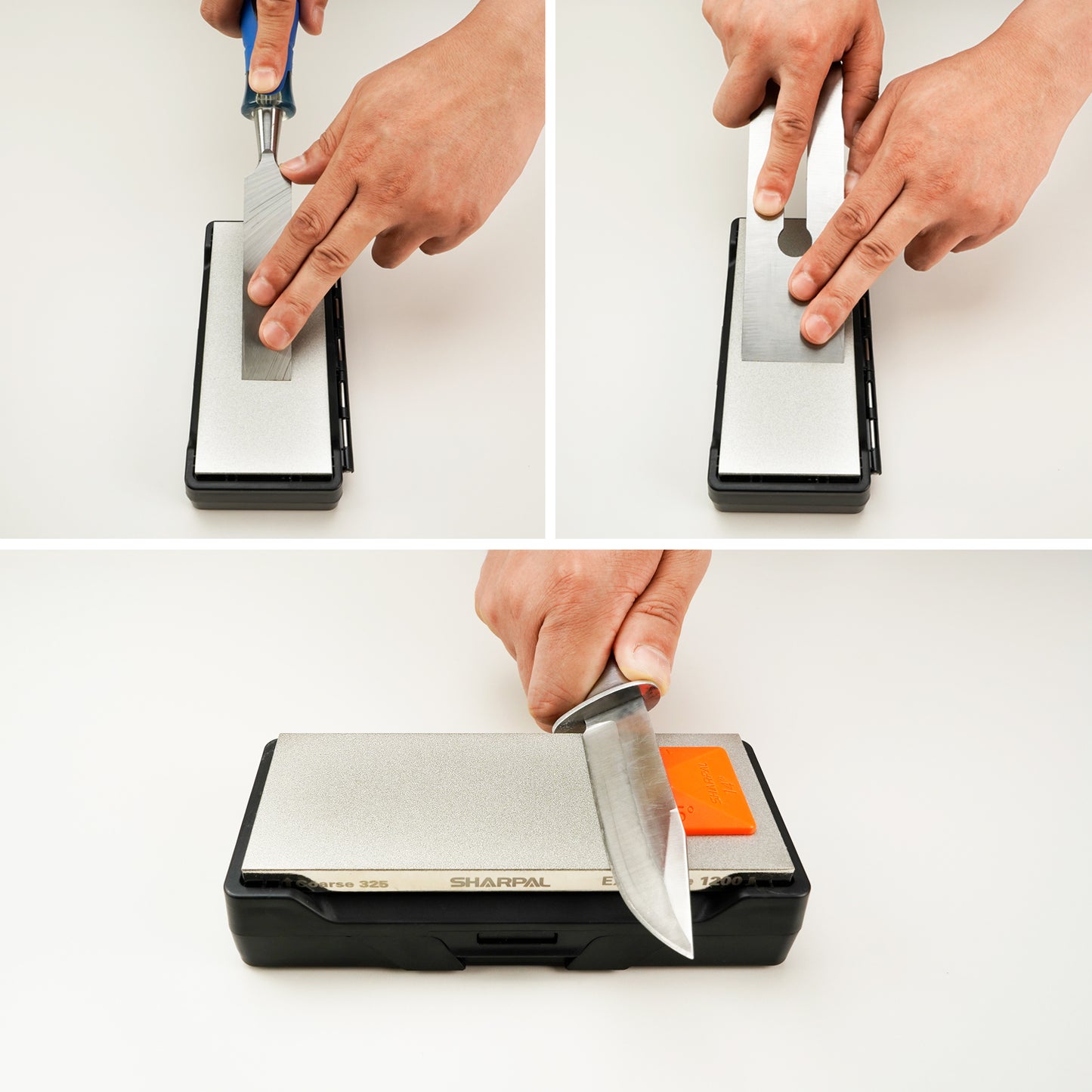
- Large 2.5 x 6 inch to allow use of full surface for wider knives and tools
- MirrorFlat™ technology guarantees even contact with knives or tools
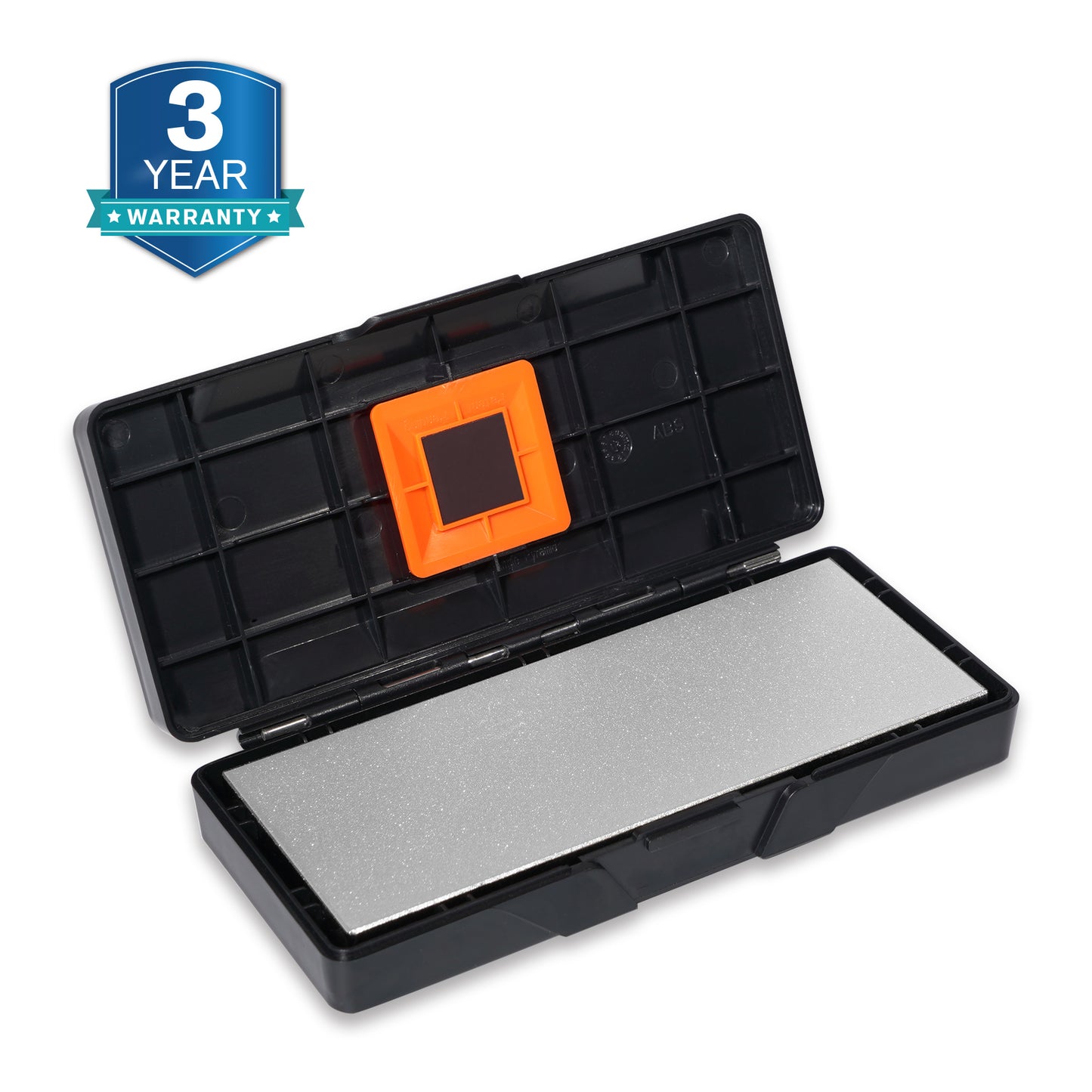
- Includes storage box with non-slip rubber pad that can be used as a stone base while sharpening
- With Angle Pyramid™ Sharpening Angle Guide
Couldn't load pickup availability
Share

Overview

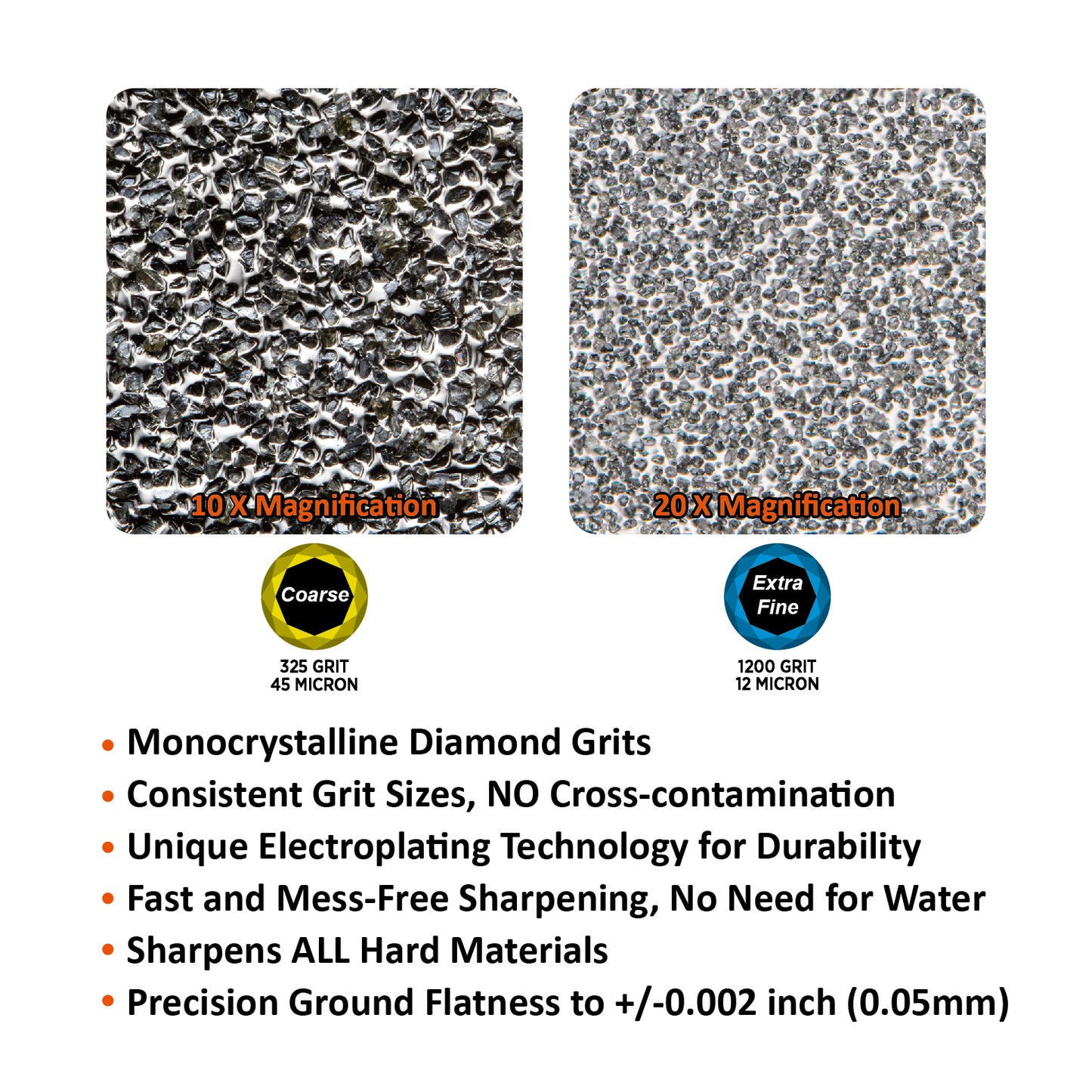
Durable Monocrystalline Diamonds
Consistent Grit Sizes · No Cross-Contamination
Sharpens All Hard Materials

Quality control ensures stone flatness
Precision Ground Flatness to +/-0.002 inch (0.05mm)

Box with Two Functions
Non-Slip Rubber Base Holder
Sturdy Storage Box with Metal Hinges
No Flattening, Super Steel Ready, Rust-Resistant


Instructional Video
Specifications
FAQ
What is the diamond sharpening surface made of?
The sharpening surface uses industrial monocrystalline diamond electroplated in nickel onto a stainless-steel base.
How flat is the sharpening surface?
SHARPAL 156N is manufactured with MirrorFlat® technology for consistent, even contact during sharpening, with precision flatness of ±0.002" / 0.05 mm.
Is water or oil required during sharpening?
Water or oil is not required. Dry sharpening is recommended. Testing shows minimal difference in sharpening performance between dry use and using fluid. If any liquid is used, clean and dry the stone thoroughly after sharpening.
Why should I avoid leaving water or residue on the stone?
The stainless-steel base itself is corrosion-resistant, but metal filings left on the surface can oxidize and appear as rust or yellow discoloration. Clean the surface after use and store the stone in a dry place.
How do I clean the diamond stone after sharpening?
Wipe the surface with a dry paper towel. If metal particles are clogged on the surface, use a rubber eraser or a soft nylon brush. For tougher stains or discoloration, Bar Keepers Friend powder can be used with a soft nylon brush, followed by thorough rinsing and complete drying.
Dark areas appeared on the surface after use. Does this mean the diamonds have worn off?
No. Dark areas are usually dried sharpening residue or metal particles, not missing diamonds. These marks do not affect sharpening performance.
Is it normal to see scratches on the surface after sharpening?
Yes. Light scratches or dark marks are normal signs of use and do not mean the diamond layer has worn off. They do not affect sharpening performance.
Is there a break-in period for the diamond surface?
Yes. A new diamond sharpener may feel especially rough at first due to the final manufacturing process. The surface will smooth out with use, and this does not negatively affect performance.
Should I use heavy pressure when sharpening?
No. Use light pressure. Excessive pressure can accelerate wear on the diamond surface and shorten the product’s lifespan.
How long does the diamond stone last?
Lifespan depends on sharpening frequency, the hardness of the tools being sharpened, the pressure used, and maintenance. With proper care, light pressure, and regular cleaning, it can last for many years.
What causes rust-colored or yellow marks on the stone?
These marks are usually caused by metal filings left on the surface that oxidize after sharpening, especially after sharpening non-stainless steel blades. The marks are not rust from the diamond stone itself.
The stone has small pits on the shorter sides. Is this normal?
Yes.
Small pits on the shorter sides can be caused by clamps used during the electroplating process. They are not defects and do not mean the product was used.
There are black marks on the edge of the diamond stone. Is it used?
Not necessarily. Black marks on the edges may be caused by friction with the plastic holder or case during transport. This does not indicate diamond abrasive loss and does not affect sharpening performance.
The plastic tabs inside the holder look worn. Is this normal?
Yes. The plastic protrusions may be pre-fitted at the factory so the diamond plate can fit securely into the holder. This helps reduce instability during sharpening.
Can SHARPAL 156N be used to flatten water stones or oil stones?
The 325 grit diamond side can flatten sharpening stones, but frequent flattening is not recommended because this product is designed primarily as a sharpening stone, not a dedicated flattening stone.
Which size should I choose: 156N 6" x 2.5" or 162N 8" x 3"?
Choose 162N 8" x 3" if you want a larger working surface, faster sharpening, and easier angle control, especially for knives 8 inches or longer and larger tools. Choose 156N 6" x 2.5" if you prefer a more compact size for smaller knives, pocket knives, portability, or limited storage space.
Can SHARPAL 156N sharpen hair-cutting scissors?
For high-value professional hair-cutting scissors, professional sharpening is recommended. For lower-value scissors, SHARPAL 156N can be used, but sharpening scissors well requires practice and proper angle control.
User Manuals
Download product manuals in your preferred language.